Wool Data in Action: On-Farm Micron Testing Driving Better Decisions.
Woven Optics took the stage at LambEx26 in Adelaide last month for a Rapid Fire session on what on-farm micron testing looks like once it's actually in a shed, not just in a pitch deck.
Co-founder Vicky Alexandrou was joined by Tim Shephard, District Wool Manager for Elders across the Mid North and Yorke Peninsula and an early adopter of the Wool Scanner, to walk producers through how objective fibre data is changing decisions from ram selection through to the wool room floor.
What the Wool Scanner actually does
For producers in the room who hadn't seen the unit in action, Vicky ran through the basics. The Wool Scanner is a portable, handheld device used scan an ear tag or a bagged sample's barcode, then capture images along a staple and once completed, you get instant average micron, standard deviation, coefficient of variation and comfort factor, tied directly to that individual animal.
Because the data is linked to the animal, not just the sample, producers can layer this season's numbers straight into their existing farm management systems and track performance across an animal's lifetime, which opens the door to things like ranking a commercial flock and culling the bottom 10–30%, joining rams and ewes on hogget metrics, or building a nucleus breeding flock from your best-performing ewes each year.
12 months of data, in numbers
Since rolling out across Australia over the past year, with strong uptake among superfine producers, Woven Optics users have now recorded:
19,000+ fibre micron tests (25K+ as of writing this article)
93,000+ fibre images (127K+ as of writing this article)
A 10–35 micron range across wool, alpaca and angora
That data is already translating to results on the ground. One grower used the system to sort their clip into tighter bale lines and pulled out a 12.8 micron line that sold for more than $27,000 — the full case study is on our website.
Tim Shephard on what it means for a wool business
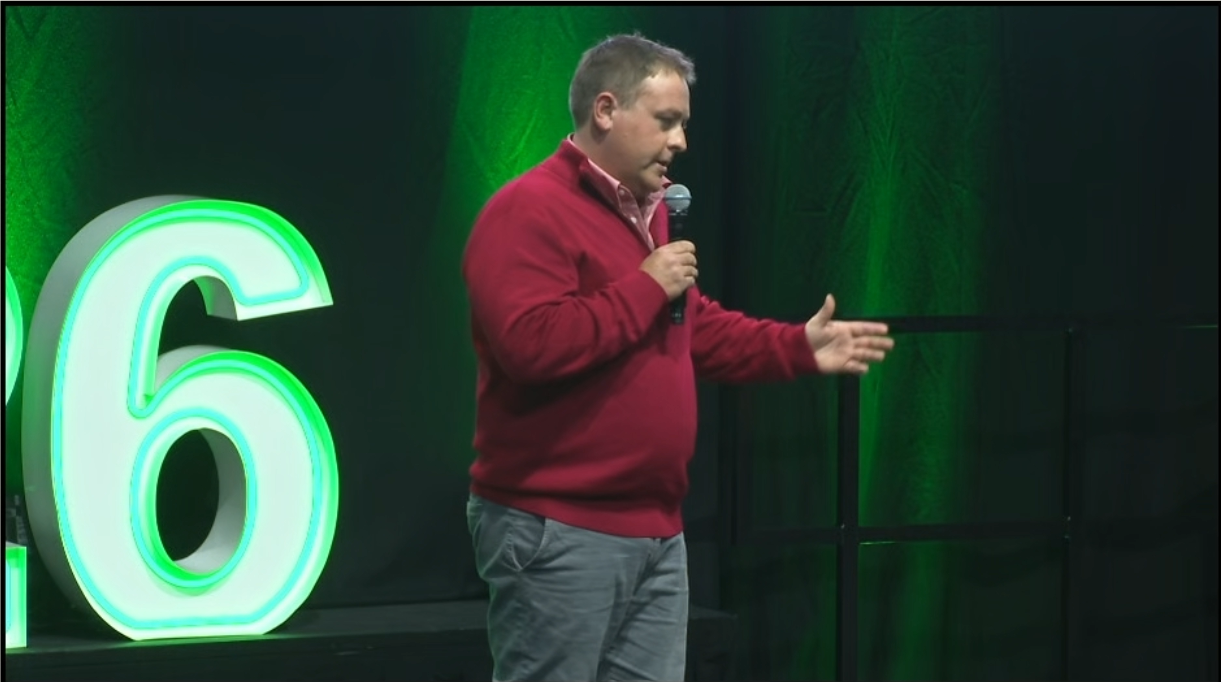
Tim Shepherd presenting alongside Woven Optics co-founder, Vicky Alexandrou at the 2026 LambEx Conference in Adelaide.
Tim's answers came from the pointy end of the industry as he's the one standing in the shed with producers, not just selling the concept.
On what the technology means for wool businesses: "Faster decisions, better outcomes as you've got fibre quality data on the spot at classing, not waiting days for off-site test results." He also pointed to the practical side: a user-friendly portal that keeps data properly recorded and easy to find, and integration with EID systems producers are likely already running, including Datamars.
On what producers need to get right: consistency. "Sampling from the same location on every sheep means your results are actually comparable and useful for real decisions." Mid-side sampling in the race, he said, is simple to monitor and adds no extra hassle to the existing workflow.
On the benefits of testing on-farm: knowing your flock's micron profile before shearing starts means you can set the shearing order and set your classer up to succeed instead of guessing. "When classers know what micron groups are coming through, they're confident in their decisions and can focus on spotting faults and cast lines, not guessing." The flow-on is a smoother yard, faster processing, fewer classing mistakes and cleaner lines to sell.
On what it means for Elders' clients specifically: Tim was direct about the commercial case: servicing clients with the latest technology gives Elders premium pricing power and lets them offer producers an additional service, exposing them to technology they might not otherwise have access to.
Why this matters beyond the session
For an industry that's built on contract classers and off-site testing houses, on-farm objective data isn't a small shift in practice and Woven Optics knows trust in this space is earned through results other producers can see and talk to, not through a slide at a conference. That's why sessions like this one matter as much as the technology itself: hearing it from someone like Tim, who's using it with clients every week, carries more weight than we ever could on our own.
If you were at LambEx26 and want to see the Wool Scanner in action on your own property, or you missed the session and want the rundown, get in touch — we're happy to talk through what it looks like for your operation, short term and long term.
Watch the full video
If you missed the chance to attend the 2026 LambEx Conference, you can now watch all the sessions via this link - LambEx2026