Wynilbah experience with the Woven Optics Wool Scanner.
Written By Jen Smith, Wynibah, Kentucky, NSW
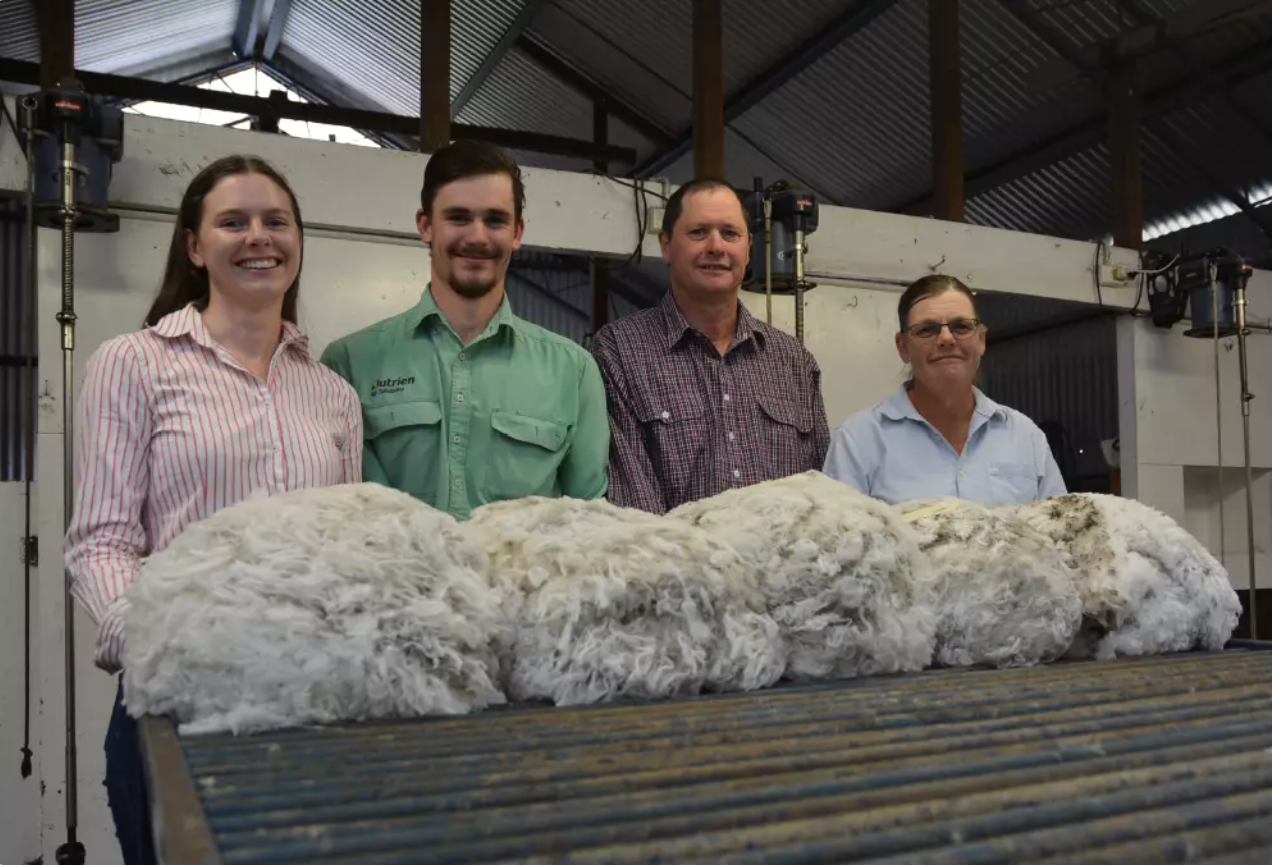
Image Source: The Land, Simon Chamberlain
We, the Smith family of Wynilbah, Kentucky (Darren, Jen, Lynden and Erin), have a mixed grazing business in the New England region of NSW. An ultrafine wool breeding flock of about 1800 ewes is the main component of our business. We all have off-farm careers and run the farm when we’re not at our day jobs.
Historically we have done varying amounts of individual fleece testing, depending on a) time constraints (ability to collect side-samples early enough to have results back for shearing or sheep selections), b) priorities in our Merino breeding objective, and c) what the wool market is doing. At times in the past we have had quite a lot of sheep in rugs, but that became uneconomic and so we no longer do that. The priorities in the breeding objective of our Merinos do change periodically – at times we’ve been actively reducing fibre diameter, and at other times have tried to hold fibre diameter to put more selection pressure on worm and flystrike resistance, and polledness.
We have invested in the Woven Optics instrument as a tool to ‘sharpen’ our wool business. We anticipate we’ll use it to aid both sheep selections and for wool classing. At least for the foreseeable future, fibre diameter records for our ram breeding flock which go to Merino select for genetic evaluation will still need to come from AWTA. However, we anticipate that we will do considerably more testing of flock sheep, including young ewe selections into the breeding flock; adult ewe selections; retention of wethers; and perhaps for some early/multistage selection of young rams in the ram breeding flock. Essentially, we’ll be more active in terms of selection of flock sheep, with the aim to remove the ‘passengers’ to make room for more ‘performers’. We will also leverage that data at shearing, adding information to the wool classing decisions, and building lines on fibre diameter (obviously still considering the length, strength and style characteristics of fleeces) with the aim of maximising our wool returns.
When we received our Woven Optics instrument, we did some initial validation using the ewes in our ram breeding flock – the side-samples were split, with one to AWTA and the other measured in-house. The results were sufficiently good to be optimistic. So, with some refinement of the sample preparation method we went ahead and measured all our 2024 drop yearlings (about 1000) pre-shearing. The individual fleece tests ranged from 11.2 to 17.3 with a flock average of 13.6 microns, which was in line with what we would expect. We used that data for wool classing at shearing and produced sale lots of fleece wool that measured 12.8, 13.0. 13.3, 13.9, and 14.5 microns. This was a very reassuring and pleasing result. Of course, the sheep that made those finer bales needed to be in the flock in the first place, but the data from the Woven Optics instrument was clearly accurate, enabling them to be identified and the fleeces classed optimally. We will also use those fleece test result, along with individual bodyweight and fleece weight records to aid the selection decisions for ewe replacements and wethers for retention. Now, the intention is to measure all the young sheep and breeding ewes annually to aid both selection and wool classing decisions.
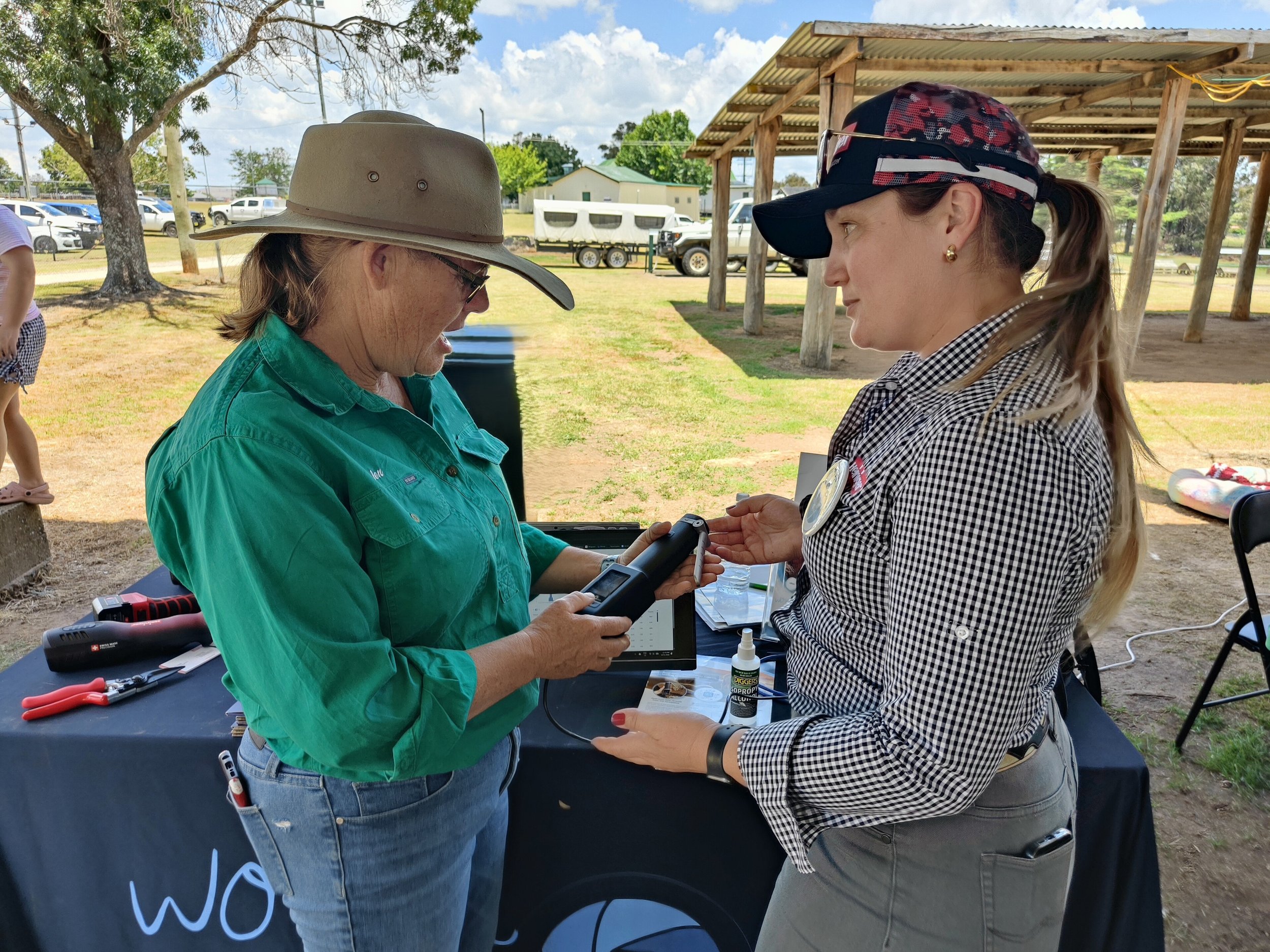
Jen Smith and Lexi Cesnik discussing all things Woven Optics. Source: V. Alexandrou
We think the Woven Optics method will be a good fit within our business primarily because we’re data-driven, and it gives us time flexibility. We don’t do in-shed fleece testing at shearing because for us, already all working in the shed, shearing is hectic enough as it is, without complicating it further with additional jobs. We are also unlikely to do race-side testing for similar reasons. However, the method of collecting samples and doing the testing at home, and at our convenience, has great appeal.
In terms of costs and benefits, our decision to go down this path is not entirely about the dollars, although that is certainly a big part of it. We will undoubtedly do more fleece testing now than we have in the past. We anticipate that will bring direct benefits to our wool revenue, but also to our breeding program, and that is more difficult to put a dollar value on. It would be less expensive to send samples away for testing, as there is a considerable time and labour cost to do the testing ourselves. However, sending samples for testing also has (different) time-related constraints that are tricky to manage in our production system. For this reason, Woven Optics might not be for everyone, but we certainly think it will fit into our system and work for us.
It has helped enormously that the Woven Optics team have been great to work with – prompt and enthusiastic to respond to queries; honest about any limitations; and keen to progress developments that will aid the method to work better in future. The pre- and after sale service has been exceptional! It is reassuring to know that they are as keen as we are to make sure this works.